Indian Traditions in Water Management and Sustainability
- 30 Hours
- Agriculture, Arts and Humanities
$27.50(Fee additional)
About The Course
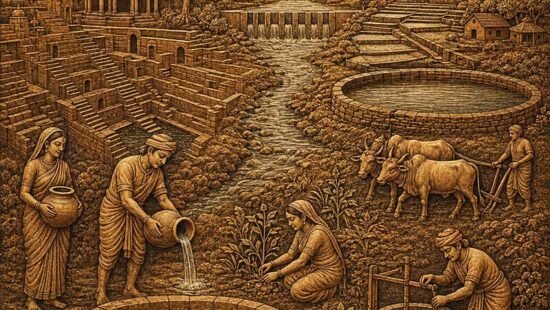
This course provides a foundational background in Indian Knowledge Systems and explores the evolution of India's ancient hydrological traditions. It examines the structure of traditional knowledge alongside specific ancient technologies—such as sophisticated hydraulic engineering and water harvesting—to address modern sustainability challenges and global water security.
Syllabus
- Unit 1: Knowledge and its Paradigm in Indian Knowledge Tradition
- • Importance and stature of knowledge in the Indian worldview
- • Foundations of knowledge: the Vedas
- •Caturdaśa-Vidyāsthānas (excluding 4 Vedas)
- • Catuṣṣaṣṭi-Kalās
- • Structure and content of the four Vedas
- • Vedangas: Śikṣā, Nirukta, Vyākaraṇa, Jyotiṣa, Chandas, Kalpa
- Unit 2: Indian Knowledge in Practice and Application
- • Upavedas and applications: Āyurveda, Gāndharvaveda, Dhatuvada
- • Applied sciences: Temple architecture, Town planning
- • Dhatuvada: Alchemy and Metallurgy
- • Specialized knowledge systems: Gandha-śāstra, Alekhyavidya, Ratna-parīkṣa, Yantra-mātr̥kā
- Unit 3: Scientific and Literary Foundations of Hydrology
- • Interpretations in the Rigveda, Mahabharata, and Ramayana, and the role of Varaha Mihira.
- • The role of rivers (Ganga, Yamuna, Sarasvati) in shaping sacred landscapes and ritual practices.
- • Philosophical approaches to water in Dharmaśāstra, Buddhist, and Jain traditions.
- Unit 4: Ancient Engineering and Urban Water Systems
- • Analysis of irrigation and sustainable management at Mohenjo-Daro, Harappa, and Dholavira.
- • Design and ecological principles of tanks, wells, and stepwells (baoris) with regional case studies.
- •Construction and long-term sustainability of ancient dams and reservoirs like Sudarshana Lake.
- • Water supply and sanitation systems in ancient cities such as Varanasi and Pataliputra.
- Unit 5: Governance, Law, and Modern Sustainability
- • Evolution of water rights and customary laws from ancient to medieval periods.
- • Historical adaptation to monsoon variability, drought, and flood management.
- • Aligning ancient practices with United Nations SDGs and successful modern revivals of traditional knowledge.
More Information
- Learning Objectives
- course aims to:
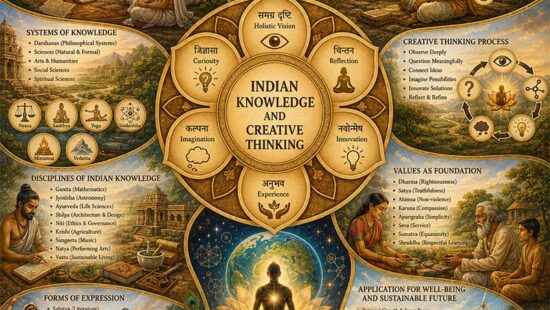
- • Cultivate foundational knowledge of India’s knowledge framework, its 14 branches of learning (Caturdaśa-vidyāsthānas), and 64 arts (Kalaas).
- • Examine hydrological principles and sustainable water practices found in ancient civilizations using archaeological and textual sources..
- • Evaluate technological innovations such as the Indus Valley irrigation systems and ancient reservoirs like Sudarshana Lake.
- • Integrate interdisciplinary insights from history, engineering, and environmental science to propose modern applications of ancient water knowledge.
- Intended Outcomes
- Upon completion of the course, students will be able to:
- • Explain the structure and hierarchy of Indian Knowledge Systems and their contributions to technical and artistic fields.
- • Critically examine hydrological principles found in ancient texts to propose solutions for contemporary water scarcity.
- • Analyze the ecological dimensions of traditional water management systems and their effectiveness in climate adaptation.
- • Apply traditional wisdom to modern professional ethics and sustainability frameworks to contribute to global water security.