Inspiring Minds, Empowering Futures:
Bridging Ancient Wisdom to Modern Education

Siddhanta Knowledge Foundation (Siddhanta) pioneers the fusion of ancient wisdom and modern education, partnering with the IKS Division to revitalize traditional knowledge. Drawing from the wellspring of ancient wisdom, Siddhanta Knowledge Foundation nurtures a new generation of leaders equipped with the knowledge and skills needed to navigate the complexities of modern leadership.

Nurturing Excellence Across Streams:
Explore Our Diverse Courses

Embark on a transformative journey of learning and discovery with our comprehensive Siksha courses. Explore the depths of Indic education, unlock ancient wisdom, and empower yourself for a brighter future. Start your educational adventure today and embrace the heritage of knowledge.

One Page at a Time
Uncovering Bharatiya Wisdom

Embark on a journey of discovery with us as we delve into the rich tapestry of Bharatiya knowledge. From out-of-print treasures to modern insights, we bring you a vibrant collection of books and digital resources to enrich your mind and soul.

Bridging Millennia:
From Manuscripts to Modern Research

We blend tradition with technology to unlock the full potential of Bharatiya knowledge. Explore, discover, and innovate with our curated collection of annotated texts through Sandhaan - a platform that brings ancient texts to life, making them accessible and intelligible for modern research and innovation.

previous arrow
next arrow
Inspiring Minds, Empowering Futures:
Bridging Ancient Wisdom to Modern Education

Siddhanta Knowledge Foundation (Siddhanta) leads the integration of ancient wisdom with contemporary education, in collaboration with the IKS Division to rejuvenate traditional knowledge. Rooted in ancient insights, SKF fosters a new breed of leaders adept in navigating today's complex challenges.

Explore Our Diverse Courses

Embark on a transformative journey of learning and discovery with our comprehensive Siksha courses. Explore the depths of Indic education, unlock ancient wisdom, and empower yourself for a brighter future. Start your educational adventure today and embrace the heritage of knowledge.

One Page at a Time
Uncovering Bharatiya Wisdom

Embark on a journey of discovery with us as we delve into the rich tapestry of Bharatiya knowledge. From out-of-print treasures to modern insights, we bring you a vibrant collection of books and digital resources to enrich your mind and soul.

Bridging Millennia:
From Manuscripts to Modern Research

We blend tradition with technology to unlock the full potential of Bharatiya knowledge. Explore, discover, and innovate with our curated collection of annotated texts through Sandhaan - a platform that brings ancient texts to life, making them accessible and intelligible for modern research and innovation.

previous arrow
next arrow
Bridging Ancient Wisdom to Modern Education

Siddhanta merges ancient wisdom with modern education, revitalizing traditional knowledge with the IKS Division.

Explore Our Diverse Courses

Explore Indic education, unlock ancient wisdom, and embrace knowledge heritage. Start your transformative journey with Siksha.

Uncovering Bharatiya Wisdom

Discover out-of-print treasures and modern insights in our vibrant collection of books and digital resources, enriching your mind and soul.

From Manuscripts to Modern Research

Dive into Sandhaan, our platform that brings ancient texts to life, making them accessible for modern research and innovation.

previous arrow
next arrow
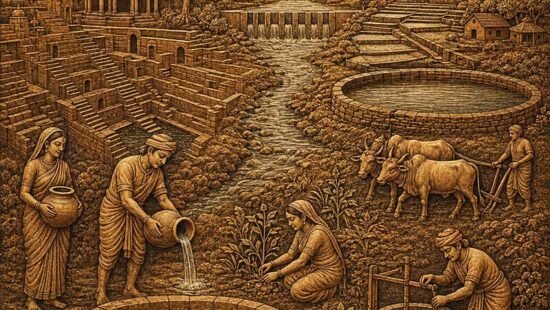
Sustainable Water Management: Indian Practices

Sustainable Water Management: Indian Practices

2,500.00(GST additional)

About The Course

This course offers an in-depth exploration of Indic reasoning and debating, focusing on cognitive processes, types of reasoning, definition-making, debating techniques, error detection, and practical applications of these concepts. The course initially provides a background to Indian knowledge systems and traditions and their relevance in various fields including that of science, & technology. The curriculum focuses onto the understanding of the principles of water management and sustainability in ancient India. Explore the technological innovations and practices related to hydrology in various ancient Indian civilizations. Analyze the relevance of traditional water management techniques in contemporary sustainability efforts. Integrate ancient Indian hydrological knowledge into modern water management practices.

Syllabus

  • Unit 1: Indian Knowledge Traditions – The Concept of Knowledge
  • This unit introduces the stature, structure, and sources of Indian knowledge traditions.
  • • Importance and stature of knowledge in the Indian worldview
  • • Definition and scope of knowledge: vidyā, jñāna
  • • Vedas as foundational texts: structure and content
  • • Śabda pramāṇa and Indian epistemology
  • • Introduction to the Vedāṅgas
  • Unit 2: Knowledge Systems in Practice – Upavedas and Applied Sciences
  • Focuses on practical and applied dimensions of Indian knowledge through Upavedas and associated disciplines.
  • • Introduction to Upavedas: Ayurveda, Dhanurveda, Gandharvaveda, Arthashastra
  • • Gandharvaveda: Music and performing arts
  • • Dhatuvada: Alchemy and Metallurgy
  • • Other applied traditions: Gandhashastra (Perfumery), Alekhyavidya (Painting), Ratnapariksha (Gemology), Yantramatrka (Mechanics)
  • • Indian architecture and town planning
  • Unit 3: Philosophical, Cultural & Textual Foundations of Hydrology
  • Examines the deeper roots of environmental thought and hydrology in Indian tradition.
  • • Introduction to hydrology in ancient India
  • • Philosophical foundations of water in Indian Knowledge Systems
  • • Hydrological cycle in classical texts
  • • Water and sacred geography
  • • Representations in literature and arts
  • Unit 4: Traditional Technologies, Practices & Governance
  • Explores sustainable water technologies and governance systems in ancient India.
  • • Traditional water harvesting techniques
  • • Irrigation in the Indus Valley
  • • Ancient dams and reservoirs
  • • Urban water supply and planning
  • • Flood and groundwater management
  • • Sanitation and wastewater practices
  • • Agricultural applications of water
  • Unit 5: Governance, Innovation and Law in Water Systems
  • Focuses on systemic thinking, governance models, and technical ingenuity in hydrological management.
  • • Legal and administrative frameworks
  • • Technological innovations and engineering
  • • Public works and climate adaptation
  • • Conservation strategies and water law development
  • Unit 6: Comparative Insights and Contemporary Integration
  • Assesses traditional hydrological wisdom in relation to global models and present-day challenges.
  • • Case studies: Mauryan and Vijayanagara water systems
  • • Ancient practices and Sustainable Development Goals (SDGs)
  • • Comparative civilizational approaches
  • • Interdisciplinary methods and media study
  • • Reviving traditional systems
  • • Public sanitation practices
  • • Future directions and policy integration

More Information

  • Learning Objectives
  • course aims to:
  • • Enables understanding of India’s knowledge framework, its genesis, evolution and key components
  • • Understand the principles of water management and sustainability in ancient India.
  • • Explore the technological innovations and practices related to hydrology in various ancient Indian civilizations.
  • • Analyze the relevance of traditional water management techniques in contemporary sustainability efforts.
  • • Ancient Indian hydrological knowledge into modern water management practices.
  • Intended Outcomes
  • Upon completion of the course, students will be able to:
  • • Identify the core concepts and classifications of Indian knowledge traditions and foundational texts. (Remembering)
  • • Describe the applied sciences and Upavedic traditions as expressions of Indian knowledge in practice. (Understanding)
  • • Explain the philosophical and cultural frameworks underpinning water and environmental thought in ancient India. (Understanding)
  • • Analyze the technologies, systems, and governance models in traditional Indian water management. (Analyzing)
  • • Evaluate the relevance of traditional hydrological wisdom in contemporary and global sustainability contexts. (Evaluating)
  • • Integrate insights from Indian knowledge systems to propose holistic and context-sensitive environmental strategies. (Creating)

You May Also Like

View All
Scroll to Top