Knowledge Traditions of India and Sustainable Agriculture
- UG
- Agriculture, STEM
₹2,500.00(GST additional)
About The Course
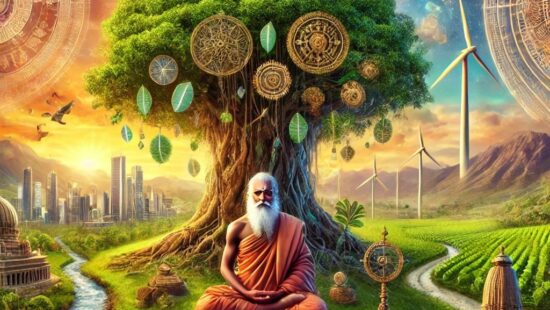
This course is a journey into how ancient Indian wisdom can help us understand science and farming today. It starts by showing the learners how India’s traditional knowledge system (IKS) was organized and how it has grown over time. Learners will explore how the stars and planets (Jyotisha) were used by ancient sages to help farmers stay in sync with nature. By looking at ancient texts like the Vedas and Krishi Parashar, we will find practical ways to predict weather, manage water, and use ancient engineering secrets to build a more sustainable world. Overall, the course connects these traditional "technical" skills—like metals and mechanics—to the modern need for environmental protection and professional ethics.
Syllabus
- Unit 1: Knowledge and Its Paradigm in Indian Knowledge Tradition (Total Modules - 20)
- It focuses on the structure and historical framework of the Indian intellectual tradition.
- ● The importance and stature of knowledge in the Indian world (IKST Module No. 1)
- ● Foundations of knowledge: the Vedas (IKST Module No. 2)
- ● The systems of knowledge: Chaturdasa-Vidyasthanas (IKST Module No. 3)
- ● Chatusshashti Kalas (IKST Module No. 4)
- ● Structure and content of the 4 Vedas (IKST - Module No. 5)
- ● Vedangas: Śikṣā, Nirukta, Vyākaraṇa, Jyotiṣa, Chandas, Kalpa (IKST - Module No. 6 - 11)
- ● Upaveda-s: Ayurveda, Gandharvaveda (IKST - Module No. 12 & 13)
- ● Dhatuvada: Science of Metallurgy (IKST - Module No. 14)
- ● Gandhashastra, Alekhyavidya (IKST - Module No. 17 & 18)
- ● Ratna-pariksha, Yantramatrka (IKST - Module No. 19 & 20)
- Unit 2: Roots of Indian Agriculture and the Vedic Cosmos (Total Modules - 06)
- It connects ancient spiritual texts to the physical world of farming.
- ● History of Krishi: Exploring the Indian history of agriculture and the importance of the Krishi Parashar text. (Sus.Agri. Module No. 1 & 2)
- ● Sages and Science: The role of the Rishiparampara in developing agricultural wisdom. (Sus.Agri. Module No. 5)
- ● Astrology and the Earth: Understanding the link between the Vedas, astrology, and the natural environment. (Sus.Agri. Module No. 6)
- ● The Sacred Harvest: Identifying agricultural crops and their significance as described in the Śrī Rudram. (Sus.Agri. Module No.7 & 8)
- Unit 3: Celestial Cycles: Predicting Weather and Water (Total Modules - 07)
- It teaches traditional methods for forecasting environmental changes.
- ● Navagraha Influences: Understanding the influence of the nine planets on agricultural output and weather patterns. (Sus.Agri. Module No. 9, 10)
- ● The Science of Water: Exploring traditional Water Divining and ancient conservation techniques. (Sus.Agri. Module No. 16 & 17)
- ● Monsoon Calculations: Learning how to calculate average rainfall and predict the arrival of the monsoon. (Sus.Agri. Module No. 18 & 19)
- ● Land and Soil Wisdom: Assessing land qualities based on the Rashis (zodiac) and traditional observations. (Sus.Agri. Module No. 20)
- Unit 4: Ancient Innovation: Engineering, Arts, and Sacred Timing (Total Modules - 08)
- It explores the intersection of physical technology and cosmic alignment.
- ● Secrets of Metallurgy (Dhatuvada): Understanding ancient Indian achievements in mineralogy and the science of metals.
- ● The Geometry of Design: Exploring traditional Indian architecture and the principles behind the 64 arts.
- ● The Science of Perfect Moments: Learning how to select auspicious Muhurtas (timings) for starting technical or agricultural projects.
- ● Ancient Mechanics (Yantramatrka): Discovering the traditional Indian approach to machines and engineering.
- Unit 5: Traditional Farming for a Sustainable Future (Total Modules - 08)
- It provides practical, hands-on techniques for long-term sustainability.
- ● Nakshatra-Based Sowing: Learning how to optimize seed sowing using the positions of the stars for better yields. (Sus.Agri. Module No. 24 & 25)
- ● Sacred Preparation: Rituals and techniques for land preparation, including the traditional method of ploughing.
- ● Care and Harvesting: Post-planting care, irrigation rituals, and traditional methods for harvesting grain. (Sus.Agri. Module No. 27)
- ● Preserving the Future: Ancient methods for seed preservation and the role of IKS in global sustainable development. (Sus.Agri. Module No. 28)
More Information
- Learning Objectives
- course aims to:
- ● Identify the structure, foundations, and 14 branches of the Indian Knowledge System.
- ● Understand the historical context of Indian agriculture and the role of the Rishiparampara (tradition of the sages).
- ● Learn to predict weather patterns and calculate rainfall using traditional Indian methods.
- ● Evaluate ancient techniques for soil preparation, seed preservation, and water conservation for a sustainable future.
- Intended Outcomes
- completion of the course, students will be able to:
- ● Explain the history and stature of knowledge in the Indian tradition and its application in arts and sciences.
- ● Apply celestial timing (Muhurtas) and Nakshatra knowledge to agricultural and technical planning.
- ● Demonstrate traditional water-divining and irrigation methods to address modern environmental issues.
- ● Integrate the ethical and sustainable principles of IKS into contemporary professional practices.