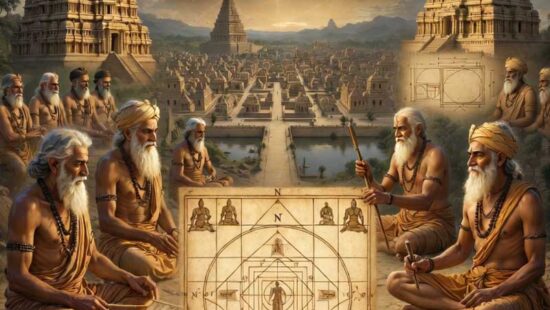
About The Course
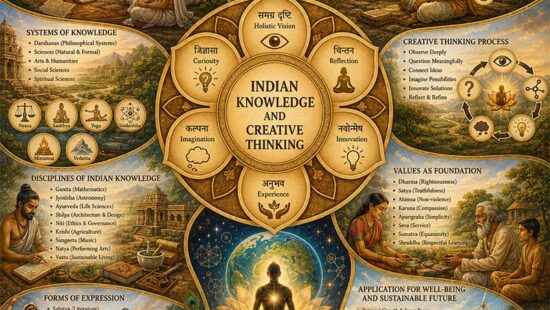
This course provides a concise overview of India’s cultural and architectural heritage, focusing on the influence of socio-cultural, environmental, and economic factors on architectural developments. The course initially provides a background to Indian knowledge systems and traditions and their relevance in the fields of sciences, technology, literature and arts. It introduces learners to traditional design principles, temple evolution, and the integration of arts in architecture, providing a foundation for appreciating and applying ancient Indian knowledge in modern contexts.
Syllabus
- Unit 1: Knowledge and Its Paradigm in Indian Knowledge Tradition
- ● The importance and stature of knowledge in the Indian world
- ● Foundations of knowledge: the Vedas
- ● The systems of knowledge: Chaturdasa-Vidyasthanas
- ● Chatusshashti Kalas
- ● Structure and content of the 4 Vedas
- ● Vedangas: Śikṣā, Nirukta, Vyākaraṇa, Jyotiṣa, Chandas, Kalpa
- ● Upaveda-s: Ayurveda, Gandharvaveda
- ● Dhatuvada: Science of Metallurgy
- ● Gandhashastra, Alekhyavidya
- ● Ratna-pariksha, Yantramatrka
- Unit 2: Foundations of Ancient Indian Architecture and Settlement Design
- ● Man, Nature, Culture, and City Forms
- ● Determinants of human settlements (natural and man-made)
- ● Architecture Beyond Buildings
- ● Functional, aesthetic, and psychological aspects of architecture
- ● Materials used in ancient Indian architecture
- ● Rock Engineering
- Unit 3: Socio-Religious and Philosophical Foundations of Architecture
- ● Socio-religious practices and philosophies (Parts 1 & 2)
- ● Functions of Design from a cultural perspective
- ● Symbolism: Shapes, Patterns, and Meaning
- ● Shadanga and Indian Architecture (Parts 1 & 2)
- ● Principles of designing compositions (Parts 1 & 2)
- ● Rituals in shaping architecture
- ● Geometry in Architecture
- Unit 4: Evolution of Temple Forms and Regional Styles
- ● Temple plans and development stages
- ● Evolution of the Hindu temple form
- ● Transformation in temple forms (Parts 1 & 2)
- ● Cave and Rock-cut architecture
- ● Dravida temples (Parts 1 & 2)
- ● Nagara and other regional temple styles
- ● Jain and Buddhist architectural interactions
- ● Elements of Temple Architecture (Parts 1–3)
- ● Elephanta (Cave Architecture)
- ● Kailashanatha Temple (Kanchi)
- ● Jagannath Puri Temple
- ● Chennakeshava Temple (Belur)
- ● Brihadeeswarar Temple (Thanjavur)
- Unit 5: Town Planning, Settlement Patterns, and Modern Relevance
- A Foundational Principles of Ancient Town Planning
- ● Town Planning in Ancient India: Overview and key concepts
- ● Vastu Shastra and its importance in city layout
- B Regional and Rural-Urban Settlement Patterns
- ● Regional Planning in Ancient Indian Settlements
- ● Urban Settlements in Ancient India: Features and innovations
- ● Rural Settlements in Ancient India: Integration with nature
- C. Structural and Engineering Innovations
- ● Cities and Forts in Ancient India: Engineering and design
- ● Road Planning in Ancient India
- ● Urban Planning in Mohenjo-Daro and Dholavira: IVC Expertise
- D. Water and Environmental Systems
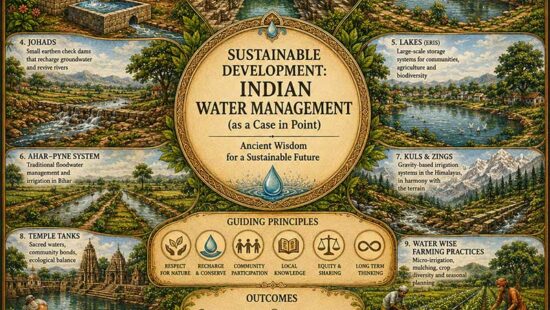
- ● Water management systems in ancient Indian cities
- ● Environmental sustainability in ancient Indian architecture
- ● E. Modern Relevance and Application
- ● Integrating Ancient Wisdom into Modern Urban Planning
More Information
- Intended Outcomes
- ● Identify the structure, hierarchy, and classifications of Indian knowledge systems, including major domains such as Vedas, Vedāṅgas, Upavedas, and Kalās. (Remembering)
- ● Describe and interpret key concepts in Indian architectural, urban, and artistic traditions, demonstrating an understanding of their socio-cultural and philosophical underpinnings.(Understanding)
- ● Apply traditional Indian planning principles—such as Vāstu, settlement design, and temple architecture—to analyze historical case studies and their relevance in present-day contexts.(Applying)
- ● Analyze architectural elements, design symbolism, and regional variations in temple forms to understand their evolution and integrative functions in Indian society. (Analyzing)
- ● Evaluate interdisciplinary aspects of Indian architectural knowledge—drawing from texts, material sciences, environment, and ritual practices—to assess their innovation and sustainability.(Evaluating)
- ● Create conceptual frameworks or visual presentations that reimagine traditional Indian architectural wisdom for contemporary use in design, education, or urban policy.(Creating)