Language coding & Linguistic Impact
₹2,500.00(GST additional)
About The Course
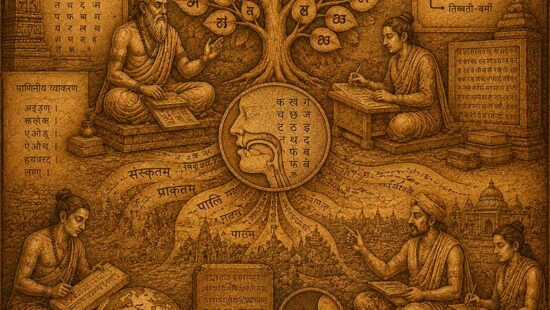
This course is designed as a foundational exploration for students of all backgrounds, offering a clear and transparent window into the technical brilliance of Pāṇini’s Aṣṭādhyāyī. You will discover how language is more than just communication; it is a metalinguistic encoding-decoding process that bridges the gap between a silent thought and an articulated word. By blending the scientific rigor of Vyākaraṇa Śāstra with the deep philosophy of Vaak, we invite you to explore the nature of meaning and the vibrant "Sphoṭa" theory that has influenced thinkers for millennia.
Syllabus
- Unit 1: Fundamentals of Pāṇinian Science
- ● Defining the foundations of science, language, and the specific discipline of Vyākaraṇa.
- ● The physics of sound generation, including frequency, intensity, resonance, and the propagation of sound in a medium.
- ● Cognitive units of language, exploring phonemes, graphemes, and the difference between semantic and pragmatic meaning.
- ● The Māheśvarāṇi sūtrāṇi and the technical skill of forming pratyāhāras (groupings).
- Unit 2: Technical Methodology and Word Derivation
- ● Mastering technical terminology (saṃjñā) such as Vṛddhi, Guṇa, It, Lopa, and Upadhā.
- ● Structural mechanics of language, specifically the rules for joining and disjoining (Sandhi) and compounding (Samāsa).
- ● Linguistic derivation processes, including the application of Kṛt, Taddhita, and Stri-pratyaya suffixes.
- ● The system of declensions (Vibhakti) and how to extract meaning from aphorisms through them.
- Unit 3: Philosophical Traditions and Theories of Meaning
- ● Introduction to the Vedic tradition, the six Vedangas, and the evolution of grammarians before and after Pāṇini.
- ● Comparative philosophical views on language from the Nyāya, Vyākaraṇa, and Mīmāṃsā schools.
- ● The power of words, exploring denotative power (pratyāyya-pratyāyaka) and the primary (Abhidhā) versus secondary (Lakṣaṇā) senses.
- ● The nature of sentences (Vākya) and the "creative spark" (Pratibhā) behind sentence meaning.
- Unit 4: Sound Philosophy and Cognition
- ● The fourfold division of Vāk, examining Vedic references and the levels of language described by Bhartṛhari.
- ● The Theory of Sphoṭa, detailing its enunciation by Bhartṛhari and the objections raised by other schools.
- ● Valid cognition (Pramāṇa) and the internal validity of linguistic communication and the Vedas.
- ● Advanced study of semantic relations, including synonyms and the concept of Apoha (Removal of doubt by the exercise of the reasoning faculty).
- Unit 5: Poetic Application and Human Objectives
- ● Analysis of foundational treatises, including the Vākyapadīya and the Siddhānta Kaumudī.
- ● The language of poetry, focusing on the power of suggestion (Vyañjanā) and artistic embellishments (Alaṅkāras).
- ● The equipment of a poet, outlining the necessary training and intellectual tools for creative expression.
- ● Linguistic mastery and the Puruṣārthas (aims of life), exploring how the study of grammar leads to the four goals of human life.
More Information
- Learning Objectives
- ● Demonstrate a foundational understanding of the terminology and scientific aspects of the Aṣṭādhyāyī.
- ● Internalize the process of articulation and the rich tradition of linguistic studies that examine the nature of language before it is even spoken.
- ● Apply the Indic framework of encoding to map and contextualise modern disciplines like coding, STEM, and the humanities
- Intended Outcomes
- ● Gain the ability to make different pratyāhāra (on their own) and perform basic metalinguistic derivational processes.
- ● Achieve a deep appreciation of the theory of Sphota (the impression produced on the mind at hearing a sound) and the Vedic perspective on the speech of all creatures.
- ● Recognize the value of traditional linguistic structures for interdisciplinary learning, gaining the ability to "dig deeper" into technical treatises through Sva-adhyāy(self-study)