About The Course
Ancient Indian knowledge is poised to drive the evolution of next-generation knowledge platforms and steer global thought-leadership with Bhāratīya ‘dṛṣṭi’ and ethos. Key highlights of the course include: ● Curated for all academic disciplines as a foundational programme ● Covers India’s knowledge framework, its genesis, evolution and key components ● Essential first step to navigate Indian Knowledge Systems meaningfully and set the context for discipline-specific concepts aligned with chosen career fields ● Bird’s eye view of India’s traditional knowledge corpus ● Contextualised and contemporised view with respect to sciences, technology, literature and arts
Syllabus
- Unit I: Foundations and Applications of Indic Knowledge (1- 12)
- • Concepts of Knowledge: Explore key traditional concepts of knowledge and their evolution in contemporary contexts. Understand the shift from ancient ideas to modern terms like 'knowledge,' 'skills,' and 'education,' and their relevance today.
- • Sources of Knowledge: Study the primary sources of Indic knowledge, including oral traditions, manuscripts, and written texts. Learn how these sources contribute to both ancient and modern knowledge systems.
- • Vedic Texts and Their Interpretations: Analyze the structure and classification of ancient texts, discussing their role as repositories of knowledge. Compare traditional and modern interpretations, focusing on how these texts continue to influence contemporary thought.
- • Knowledge in Rituals: Examine the relationship between knowledge and rituals, particularly the mutual influence between ancient texts and ritual practices.
- Unit II: Foundations and Contemporary Relevance of Indic Auxiliary Sciences ( 13- 19)
- • Overview of Auxiliary Sciences: Study the traditional sciences that supported ancient knowledge systems, focusing on their original roles and their modern relevance.
- • Phonetics and Linguistics: Explore the development of phonetics, phonology, and linguistic principles that have influenced modern language studies.
- • Mathematics and Metrics: Analyze the ancient methods of protecting oral texts and prosody, and how these have contributed to the development of mathematics, including binary calculations and the concept of zero.
- • Semantics and Hermeneutics: Investigate the protection and interpretation of meanings in ancient texts, leading to foundational ideas in modern semantics and linguistic theory.
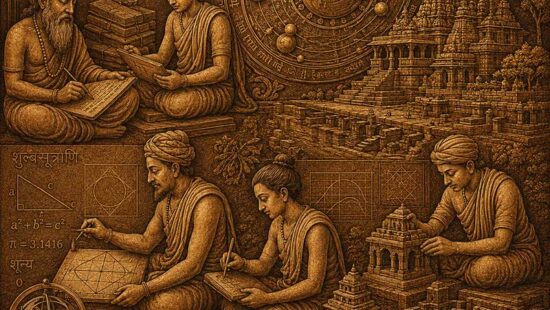
- • Rituals and Geometry: Understand the procedures and mathematical concepts that were central to ancient rituals, and how they connect to contemporary geometry and other scientific disciplines.
- • Astronomy and Meteorology: Examine the traditional knowledge of space and time, and its contribution to modern fields like astronomy and meteorology.
- Unit III: Interpretative Frameworks and Philosophical Systems in Indic Knowledge ( 20 -31)
- • Interpretation of Ancient Texts: Explore traditional methods of interpreting ancient texts and their modern relevance in areas such as linguistic analysis, cognitive studies, and knowledge management.
- • Philosophical Systems: Study key philosophical frameworks like Mimaamsaa, Vedaanta, Nyaaya, Vaisheṣika, Saankhya, and Yoga, focusing on their original contexts and their applicability to contemporary issues in philosophy, psychology, and ethics.
- • Epic and Narrative Literature: Analyze how ancient epics and other literary works serve as repositories of knowledge, offering direct and indirect insights into various aspects of life, culture, and the environment.
- Unit IV: Comprehensive Overview of Indic Knowledge Systems ( 32-40)
- • Survey of Key Texts: Study major Indic texts and traditions such as those focused on governance, aesthetics, music, and health, including Arthashaastra, Naatyashaastra, Sangeeta, Alankaarashaastra, Ayurveda, Vaastu, Citra-sutra, Dhanurveda etc.
- • Traditional Knowledge Classifications: Examine traditional models of knowledge classification, including:
- • The 64 fields of knowledge.
- • Three Cleansing Sciences: Ayurveda (body), Yoga (mind), and Vyākaraṇa (speech).
- Unit V: Contemporary and Traditional Classifications of Knowledge( 41-55)
- • Vedic Knowledge Model
- • Health and Wellness: Ayurveda.
- • Linguistics: Language studies from Vyaakaraṇa.
- • Mathematics: Concepts from Chandas and Sulba-sutras.
- • Aesthetics: Principles from Alankaarashaastra.
- • Logic: Theories from Nyāya.
- • Public Administration: Insights from Arthashaastra.
- • Psychology: Ideas from Yoga and Upanishads.
- • Ethics: Concepts of Dharma from various texts.
- • Research Methods: Investigate the potential for research on traditional knowledge systems using fieldwork, ethnography, and other qualitative methods.
More Information
- Learning Objectives
- ● This curriculum offers Caturdaśa-vidyāsthānas - Topography of disciplines
- ● Classification of Indic knowledge disciplines
- Intended Outcomes
- ● Exposure and awareness of the various disciplines of Indic Knowledge
- ● Understanding the application of the various disciplines in present times