About The Course
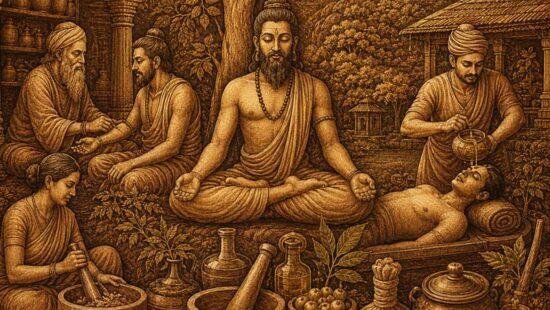
This curriculum provides a comprehensive overview of Ayurveda as an Indic science of life. It explores the foundational principles and underlying philosophy of Ayurveda. Designed specifically for undergraduate and postgraduate students, this course aims to address both their current academic requirements and future professional needs. The course initially provides a background to Indian knowledge systems and traditions and their relevance in the fields of sciences, technology, literature and arts. Additionally, each module within the curriculum is meticulously created to develop an awareness about Ayurveda and further its application for physical, psychological, spiritual and social wellbeing of an individual. Extensive research has been undertaken to craft a curriculum that is both essential and relevant for students. This course will take you on an introspective journey, revealing the eternal wisdom of Ayurveda through the Bharatiya lens unlocking the true potentials of the body, mind and soul to optimize performance in everyday life.
Syllabus
- Unit 1: Indian Knowledge Traditions – The Concept of Knowledge
- • Importance and stature of knowledge in the Indian worldview
- • Definition and scope of knowledge (vidyā, jñāna)
- • Vedas as foundational texts; structure and content
- • The idea of śabda pramāṇa and its role in the epistemology of Indian knowledge systems
- • Introduction to Vedāṅgas
- Unit 2: Knowledge Systems in Practice – Upavedas and Applied Sciences
- • Introduction to Upaveda-s: Ayurveda, Dhanurveda, Gandharvaveda, Arthashastra
- • Applied sciences and their textual foundations:
- • Gandharvaveda (Music and performing arts)
- • Dhatuvada (Alchemy and Metallurgy)
- • Gandhashastra (Perfumery), Alekhyavidya (Painting), Ratnapariksha (Gemology), Yantramatrka (Mechanics)
- • Indian architecture and town planning
- Unit 3: Foundations and Key Concepts of Ayurveda
- • History, origin, and evolution of Ayurveda
- • Literature sources and Trisutra framework
- • Definitions of Ayu, Ayurveda, Swastha, and Tridanda Siddhanta
- • Ashtanga Ayurveda, Samanya-Vishesha Siddhanta, Loka-Purusha Samya
- • Introduction to key terminologies: Guna, Karma, Dravya, Nava Karana Dravya, Panchamahabhuta, Vimshati Guna, Dhatu Samya
- • Tridosha Siddhanta, Manasika Doshas, Doshik Clock, Agni, Koshta, Prakriti, Dhatu, Mala, Rasa, Virya, Vipaka, Dravyas, Desha
- Unit 4: Disease Classification and Treatment Models
- • Roga, Rogi, Padachatushtayam, Trividha Hetu
- • Classification of diseases based on prognosis
- • Introduction to Achara Rasayana
- • Dvividhopakramaniya – Two modes of treatment
- • Dosha-wise treatment: Vata, Pitta, Kapha
- • Agrya Dravyas – best substances for dosha balance
- Unit 5: Holistic Wellness and Mental Health
- • Components of holistic treatment (Daiva Vyapashraya, Yukti Vyapashraya, Sattvavajaya)
- • Trividha Ayatana, Samyak Yoga
- • Principles of managing mental health
- • Concept of ethical and spiritual lifestyle in Ayurveda
- Unit 6: Ayurveda for Personal Life Management
- • Tisraishaniya – Three universal desires
- • Trayopasthambha – Pillars of life: Ahara, Nidra, Brahmacharya
- • Achieving desires through Ayurvedic lifestyle
- • Dinacharya (daily regimen), Rutucharya (seasonal regimen)
More Information
- Learning Objectives
- The course aims to:
- • Enables understanding of India’s knowledge framework, its genesis, evolution and key components
- • Introduces the fundamental principles and key concepts of Ayurveda.
- Intended Outcomes
- Upon completion of the course, students will be able to:
- • Identify the structure, hierarchy, and classifications of Indian Knowledge Systems and list the specific domains covered within them. (Remembering)
- • Explain the principles and foundational ideas of Ayurveda as described in classical texts like the Charaka Samhita and Sushruta Samhita. (Understanding)
- • Apply Ayurvedic concepts such as Tridosha, Agni, and Prakriti to contemporary challenges in health and wellness. (Applying)
- • Analyze the structural coherence and philosophical basis of Ayurveda through core conceptual frameworks such as Trisutra, Samanya-Vishesha, and Loka-Purusha Samya. (Analyzing)
- • Evaluate the holistic wellness practices offered in Ayurveda, including mental, ethical, seasonal, and lifestyle dimensions. (Evaluating)
- • Create a personalized wellness model using Ayurvedic principles for managing one’s own lifestyle and well-being. (Creating)