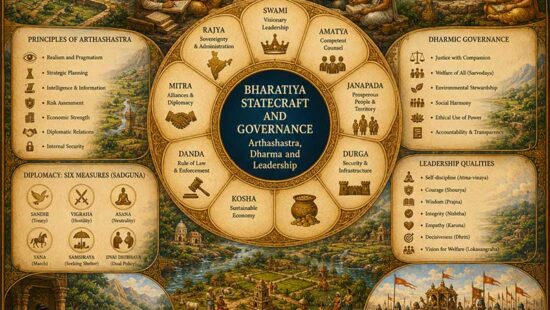
Bharatiya Statecraft and Governance: Arthashastra, Dharma and Leadership
- 45 Hours
- UG
- Law, Management
₹3,250.00(GST additional)
About The Course
This 3-credit undergraduate course introduces Bharatiya statecraft through the Arthashastra in dialogue with Dharma Shastra, Nyaya/Anvikshiki, Indic knowledge sources, public administration, economic thought, law, justice, discourse traditions, and contemporary policy questions. The course enables learners to examine how governance, leadership, welfare, taxation, local institutions, diplomacy, rational deliberation, and ethical decision-making were conceptualised in Indian traditions, and how these frameworks can inform responsible public leadership today.
Syllabus
- Unit 1 “IKS Foundations and First Principles of Governance”
- ● Explore the conceptual foundations of Indian Knowledge Systems (IKS), comparing Vedic and contemporary knowledge contexts.
- ● Comprehensive overview of the Vedas, oral and written traditions, and the traditional classifications of Indic knowledge.
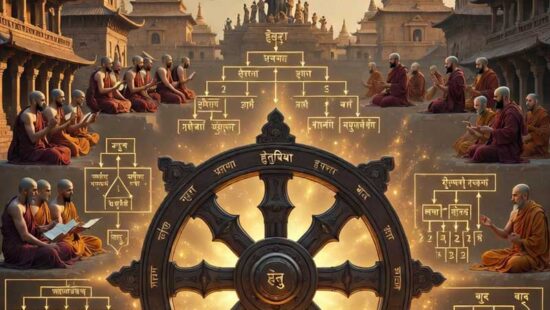
- ● Introduction to Nyāya and the Vedic Science of Reasoning as foundational tools for logic and governance.
- ● Analysis of Dharmashastra and Arthashastra within the broader knowledge ecosystem, focusing on the origins of public administration and ethics.
- Unit 2 “Dharma, Society and Civilisational Order”
- ● Examination of the Aims of Human Life and the role of Purusharthas in shaping public life and governance.
- ● Detailed study of the Dharma, Varna, and Ashrama frameworks, focusing on how they foster social cohesion and order.
- ● Distinction between Svadharma (individual duty) and Samanya Dharma (universal ethics), and the concepts of Pravritti and Nivritti in social life.
- ● Exploration of Nitishastra and the Trayi concept, focusing on the responsibilities of the householder (Grihastha) and the regulatory role of Dharma Shastra.
- Unit 3 “Arthashastra, Anvikshiki and Leadership Ethics”
- ● In-depth study of Artha and Chanakya’s Arthashastra, focusing on historical foundations and strategic insights for modern governance .
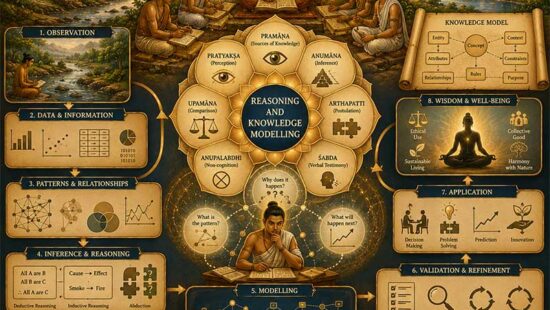
- ● Mastery of Anvikshiki (the science of reasoning) to integrate philosophy, economics, and statecraft for ethical decision-making .
- ● Focus on Sattvam in leadership and the cultivation of specific virtues such as Ahimsa (non-violence), Truthfulness, and Kshamaa (forgiveness) .
- ● Examination of the duties across different ashramas—Brahmacharya, Vanaprastha, and Sannyasa—as pathways to intellectual and spiritual leadership .
- Unit 4 “Economic Policy, Administration and Local Governance”
- ● Analysis of Vaarta (agriculture, trade, and commerce) and Chanakya’s principles for wealth creation and public welfare.
- ● Evaluation of the roles of the King, ministers, and other state officials in maintaining national defense and diplomacy.
- ● Local Governance Models: Detailed study of the Tamil Nadu governance model, including the election processes of village councils and the functioning of Variyams (departments).
- ● Exploration of land ownership types and historical taxation mechanisms, including modes of tax collection.
- Unit 5 “Law, Justice, Evidence, Discourse and Application”
- ● Introduction to Indian jurisprudence, focusing on Mauryan governance and the ethical lessons of Ashoka’s Pillar Edicts.
- ● Analysis of the ancient judicial structure, including Vivadasthanas (titles of law) and the theory of punishment.
- ● Application of Pramana (evidence), Vaada (dialectic framework), and Adhikaranam (discourse framework) to resolve public issues.
- ● Concluding with leadership lessons from the Itihasa (epics) and Buddhist reasoning to demonstrate ethical, evidence-based governance thinking.
More Information
- Learning Objectives
- ● LO1: Explain the key sources, classifications, and epistemic foundations of Indic Knowledge Systems relevant to governance.
- ● LO2: Interpret Arthashastra, Dharma Shastra, Anvikshiki, and Nitishastra as complementary frameworks for statecraft and public life.
- ● LO3: Analyse the relationship between dharma, social organisation, leadership conduct, economic prosperity, and public welfare.
- ● LO4: Evaluate Indic models of administration, local governance, taxation, justice, evidence, and punishment in their historical and conceptual contexts.
- ● LO5: Apply Indic principles of reasoning, evidence, discourse, and ethical leadership to contemporary governance and policy situations.
- ● LO6: Formulate integrated case-based responses that connect classical Bharatiya governance principles with modern institutional needs.
- Intended Outcomes
- ● CO1: Explain the conceptual foundations of Bharatiya governance using appropriate IKS terminology and source traditions.
- ● CO2: Compare the roles of Arthashastra, Dharma Shastra, Nyaya/Anvikshiki, and Nitishastra in shaping public decision-making.
- ● CO3: Analyse leadership, social responsibility, economic policy, and welfare from the perspective of dharma and artha.
- ● CO4: Evaluate historical governance institutions such as ministerial systems, local assemblies, taxation mechanisms, and judicial processes.
- ● CO5: Apply pramana, rational discourse, and debate frameworks to assess public issues, legal reasoning, and policy communication.
- ● CO6: Develop well-structured reflections or case analyses that demonstrate ethical, evidence-based, and culturally rooted governance thinking.