
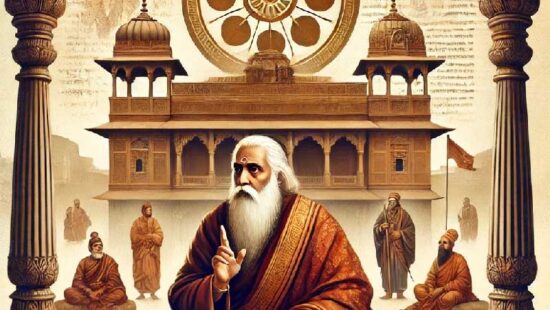
Governance and Statecraft in Indian Knowledge Systems
- 30 Hours
-
2 Credits
*(T&C Apply) Credits applicable only for Undergraduate and Postgraduate students enrolling for SIKSHA courses through academic institutions based in India.
- UG
- Upcoming Courses
₹5,000.00(GST additional)
About The Course
The Artha Shastra course offered by Siddhanta Knowledge Foundation delves into the ancient Indian treatise on statecraft, economic policy, and military strategy, emphasizing its relevance in modern governance, ethical leadership, and economic stability. The course initially provides a background to Indian knowledge systems and traditions and their relevance in the fields of sciences, technology, literature and arts. It then moves to focus on the Vidyasamuddesa segment of the Artha Shastra and its practical applications in public administration. Students will explore various societal aspects such as economic principles, ethical and moral lessons, strategic thinking, and leadership skills, drawing from Indian culture and history.
Syllabus
- Unit 1: Knowledge and its Paradigm in Indian Knowledge Tradition
- • Importance and stature of knowledge in the Indian world
- • Foundations of knowledge: the Vedas
- • Chaturdasa-Vidyasthanas (excluding 4 Vedas)
- • Chatusshashti Kalas
- • Structure and content of the four Vedas
- • Vedangas: Śikṣā, Nirukta, Vyākaraṇa, Jyotiṣa, Chandas, Kalpa
- Unit 2: Indian Knowledge in Practice and Application
- • Upavedas and applications: Ayurveda, Gandharvaveda, Dhatuvada
- • Applied sciences: Temple architecture, Town planning
- • Specialized knowledge systems: Gandhashastra, Alekhyavidya, Ratna-parīkṣa, Yantramātr̥kā
- Unit 3: Foundations of Artha Shastra and Leadership
- • Key ideas from Artha Shastra and its historical evolution
- • Definitions and dimensions of artha
- • Strategic insights from Chanakya's Artha Shastra
- • Sattvam and leadership development
- • Anvikshiki as a foundation for statecraft and personal growth
- Unit 4: Dharma, Social Structures, and Ethical Worldview
- • Trayi and Itihasa in knowledge transmission
- • Varna and Ashrama systems as foundations of Dharma
- • Svadharma: Individual and social responsibility
- • Life-cycle stages: Brahmacharya and Grihastha Dharma
- • Philosophical underpinnings of ethical action (Anvikshiki)
- Unit 5: Advanced Leadership and Ethical Governance
- • Vanaprastha and Sannyasa: Paths to inner detachment and wisdom
- • Ethical principles for governance: Ahimsa, Satya, Shaucha, Anasuya, Aanrsamsyam, Kshamaa
- • Chanakya’s teachings on personal ethics and state responsibilities
- Unit 6: Economic Governance and Strategic Statecraft
- • Vaarta: Agriculture, animal husbandry, trade
- • Wealth generation and public welfare in Artha Shastra
- • Chanakya’s strategies for defense, diplomacy, internal stability
- • Application of Artha Shastra principles to modern policy and governance
More Information
- Learning Objectives
- The course aims to:
- • Foundational: Enables understanding of India’s knowledge framework, its genesis, evolution and key components
- • Understanding Artha: To explore the concept of 'artha' beyond material wealth, encompassing objectives, purposes, and societal welfare, and its significance in Bharateeya culture.
- • Legacy and Evolution: To discuss the historical development of the Artha Shastra texts, including contributions from Chanakya and previous scholars like Sukracharya and Brhaspati.
- • Timeless Principles: To examine the enduring relevance of Artha Shastra's principles in contemporary governance, ethical administration, and balanced societal prosperity.
- • Comparative Analysis: To analyze how Artha Shastra's pragmatic approach contrasts with modern democratic and human rights-focused governance models.
- • Practical Applications: To apply key concepts like 'Nyaya' (means of administration) and 'Dharma' (administration) in modern-day scenarios for effective societal and individual administration.
- Intended Outcomes
- Upon completion of the course, students will be able to:
- • Identify the structure, hierarchy, and classifications within Indian knowledge systems and outline key domains such as traditional knowledge, architecture, and arts. (Remembering)
- • Explain the concept of artha and describe its implications for societal welfare and governance. (Understanding)
- • Summarize and contextualize the historical evolution of Artha Shastra and evaluate the contributions of key ancient scholars. (Understanding & Evaluating)
- • Apply principles from Artha Shastra to contemporary governance and administrative practices. (Applying)
- • Compare and analyze Artha Shastra’s approach to statecraft and economy with modern models. (Analyzing)
- • Integrate and implement ethical principles derived from Artha Shastra into real-world leadership and decision-making scenarios. (Creating & Applying)