
About The Course
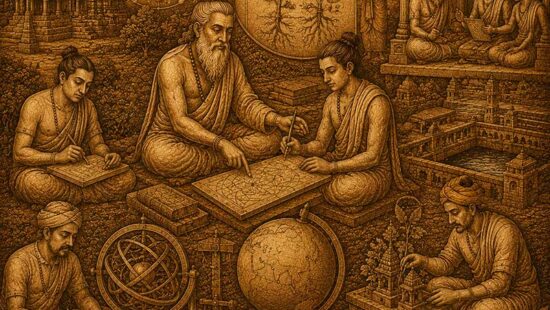
This curriculum provides a comprehensive introduction of the Indian Knowledge Systems, touching upon their philosophy and conceptual underpinnings. It imparts the importance knowledge protection, providing the Indian idea of knowledge transmission, validation and application. It elucidates the relevance of Indian knowledge systems from the perspectives of sustainability and widespread wellbeing, the core purposes that Indian sciences strive to serve. It highlights the contributions of IKS in varied fields of science and technology that may be integrated with modern systems for better outcomes and benefits.
Syllabus
- Unit I: Introduction to Philosophy of IKS, its Conceptual Underpinnings & Global Relevance
- • Key elements, philosophical foundations of IKS
- • Common misconceptions regarding IKS vs facts
- • Universality and contemporary relvance of IKS
- • Comparative analysis of scientific tradition
- Unit II: Knowledge Transmission, Protection & Applications
- • Protecting traditional knowledge
- • Knowledge acquisition, transmission, validation and real world application of IKS and its principles
- Unit III: Systems of Science, Health & Environmental Management
- • Contributions of Indian scientists and thinkers (mathemtics, chemistry, botany etc)
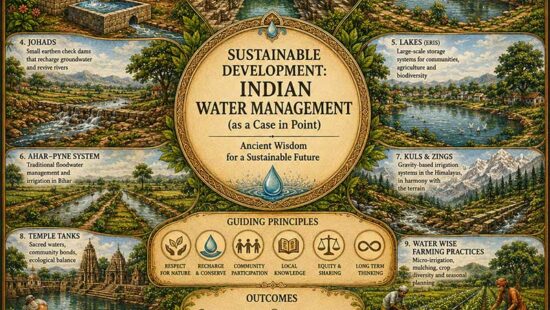
- • Eco sustainability through agriculture and water management
- • Health and wellness practices: An overview
More Information
- Learning Objectives
- This is meant to be a discipline specific course that aims to equip STEM learners with the scientific philosophy and applications in IKS, as relevant to contemporary settings
- Intended Outcomes
- • To bridge traditional Indic concepts with modern fields like health and wellness, enabling their application in today’s academic and professional contexts.
- • To equip students to access and interpret Indic sources for application in modern research, promoting innovative solutions to contemporary challenges.
- • To explore the scientific and technological principles within Indic traditions, applying them to contemporary fields like environmental science, health and wellness, agriculture etc.
- • To conduct comparative analysis between Indic and modern knowledge systems to inspire new models forging sustainable outcomes in science, technology, and related ethics.